
Sushi night just got a whole lot easier! This Salmon Sushi Bake has all the sushi-inspired flavors you love in a warm, creamy bake for a delicious twist on your favorite sushi roll. Serve with roasted nori or seaweed and your favorite toppings for a fun dinner the whole family can dig into!
Love salmon? We do too! Try these favorites: Bang Bang Salmon Bites, Baked Salmon with Parmesan Herb Crust, and this easy (no clean-up!) Baked Salmon In Foil!
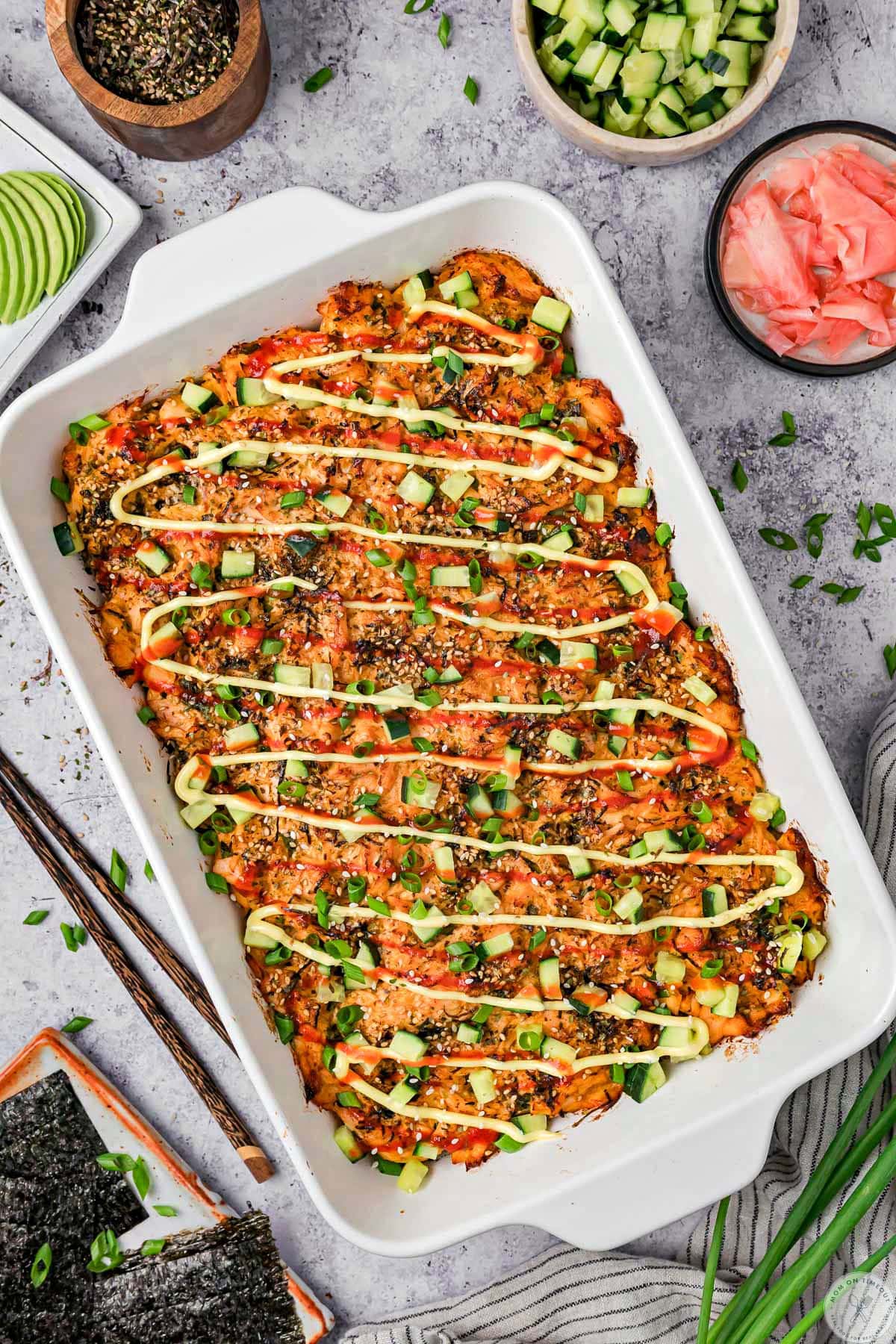
Sushi Bake
Sushi night just got a whole lot easier! This Salmon Sushi Bake combines seasoned sushi rice with creamy, spicy salmon in a warm, scoopable dish that’s perfect for sharing. This recipe is a favorite of Bryce’s. He first had it at a friend’s house and came home raving about this amazing baked sushi that he had for dinner. I was so intrigued and he was right – this sushi bake is a must make for sushi lovers!
Fresh cucumber, avocado and crisp roasted nori bring all those delicious flavors and textures together. It’s a fun way to enjoy a sushi-inspired dinner at home without rolling individual pieces.
While it may feel counterintuitive to ‘bake’ sushi – you are going to love the convenience and flavor in this recipe! We get baked sushi often at our local sushi place and while I was skeptical at first about ‘hot sushi’, it’s now one of our favorite ways to enjoy it!
The oven brings the seasoned rice and rich salmon topping together into a delicious, scoopable bake. Add crisp nori, cool cucumber and creamy avocado, and you get that irresistible mix of flavors and textures in every bite.
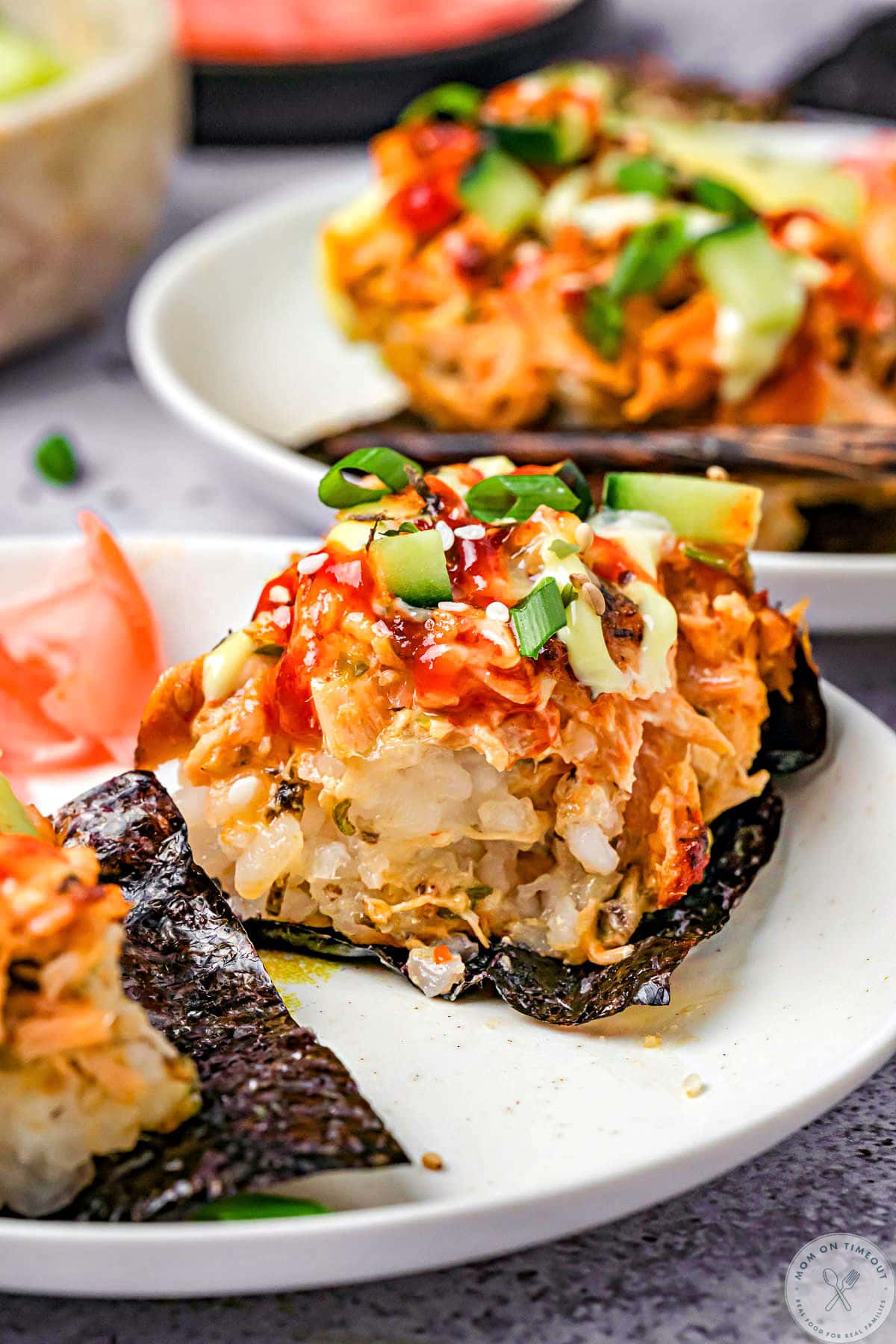
Why You’ll Love This Baked Sushi Recipe
One of my favorite things about this recipe is how easy it is to customize each bite. Serve the baked sushi with toppings on the side so everyone can add extra crunch, a little more heat or another drizzle of creamy mayo.
The salmon is fully cooked, and the layered assembly is simple enough for a relaxed dinner at home. Just set everything out and let everyone dig in. Lots to love about this sushi bake!
- No rolling required. Spread the rice and salmon into a baking dish, warm it through and serve.
- Easy to customize. Adjust the sriracha and let everyone choose their own toppings.
- Made for sharing. A 9×13-inch dish makes this a great option for family dinners or a casual meal with friends.
- So much flavor and texture. Tangy rice, rich salmon, crunchy cucumber and roasted nori make each scoop delicious.
- Simple assembly. Cook the rice while the salmon bakes to keep the prep moving.
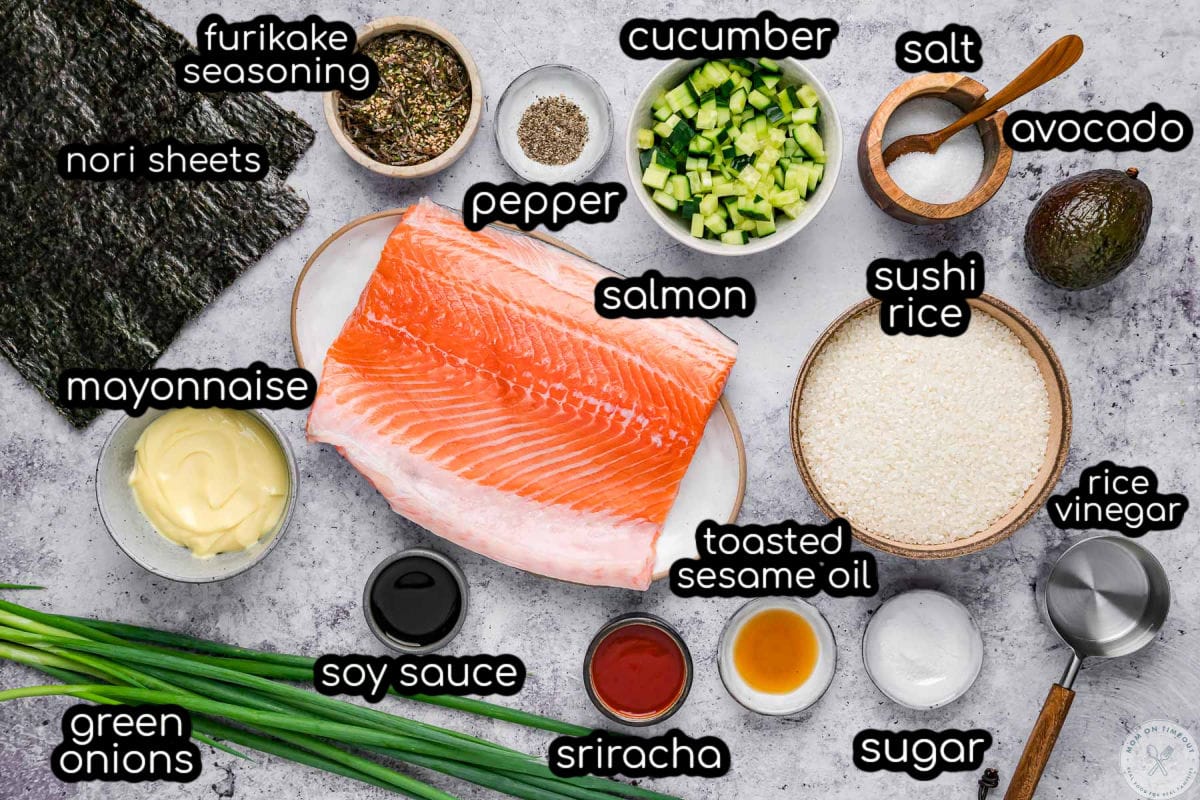
Ingredients & Substitutions
Each layer adds something a little different, from the lightly tangy rice to the creamy salmon topping. Here’s a closer look at what you’ll need and what each ingredient does. You can find the full amounts and instructions in the recipe card below.
For the sushi rice:
- Sushi rice: Creates the tender, slightly sticky base that holds together when scooped onto nori. Japanese-style short-grain rice is ideal, but medium-grain rice will also work. Jasmine or other long-grain rice can be used in a pinch, although the bake won’t hold together quite as well.
- Rice vinegar: Adds the gentle tang that gives the rice its signature flavor. Unseasoned rice vinegar is best here since you’ll add sugar and salt separately.
- Granulated sugar: Balances the vinegar’s acidity without making the rice taste overly sweet.
- Salt: Seasons the rice and brings the sweet and tangy flavors together.
For the salmon mixture:
- Salmon fillet: The star of the filling! Once baked and flaked, it mixes easily with the creamy sauce. Remove any skin and pin bones before assembling. Fresh or frozen salmon works well; thaw frozen salmon completely and pat dry before baking. You can also use plain, previously cooked salmon and skip the initial baking step. Remove any skin and bones before mixing.
- Salt and freshly ground black pepper: Season the salmon before baking.
- Kewpie mayonnaise: Gives the filling a rich, creamy texture and tangy flavor. Regular mayonnaise works in a pinch, though the flavor will be slightly different.
- Sriracha: Adds heat and a little garlicky tang. Adjust the amount to suit your family’s preferences.
- Soy sauce: Adds savory depth and saltiness to the salmon mixture. Reduced-sodium soy sauce works well in the same amount. Tamari is another option, while coconut aminos will give the filling a slightly sweeter, less salty flavor.
- Toasted sesame oil: One of my all time favorite ingredients! Provides a concentrated nutty flavor that complements the fish and seaweed.
- Green onions: Add a mild onion flavor to the filling and a fresh finish on top. You’ll use three in the salmon mixture and reserve the remaining two for serving.
For assembly and serving:
- Furikake seasoning: Adds savory flavor and texture between the layers and over the salmon. Blends vary, but many include sesame seeds and seaweed. If you can’t find it, try a combination of toasted sesame seeds and finely crumbled roasted nori. The flavor won’t be identical, but it’s a delicious alternative.
- English cucumber: Adds cool, fresh crunch to balance the creamy filling. Persian cucumbers are an easy substitute. A regular cucumber also works; peel it if the skin is tough and scoop out the watery seeds before dicing.
- Avocado: Brings a buttery texture that pairs beautifully with the spicy salmon.
- Roasted nori sheets: Make crisp little wraps for scoops of rice and salmon. Cut larger sheets into manageable pieces for serving. Roasted seaweed snacks also work, although they’re more delicate, so keep the scoops small. You can also serve the bake in bowls with crumbled nori on top.
- Pickled ginger: Adds a bright, tangy contrast to the rich bake. Completely optional so leave off if you don’t enjoy ginger.
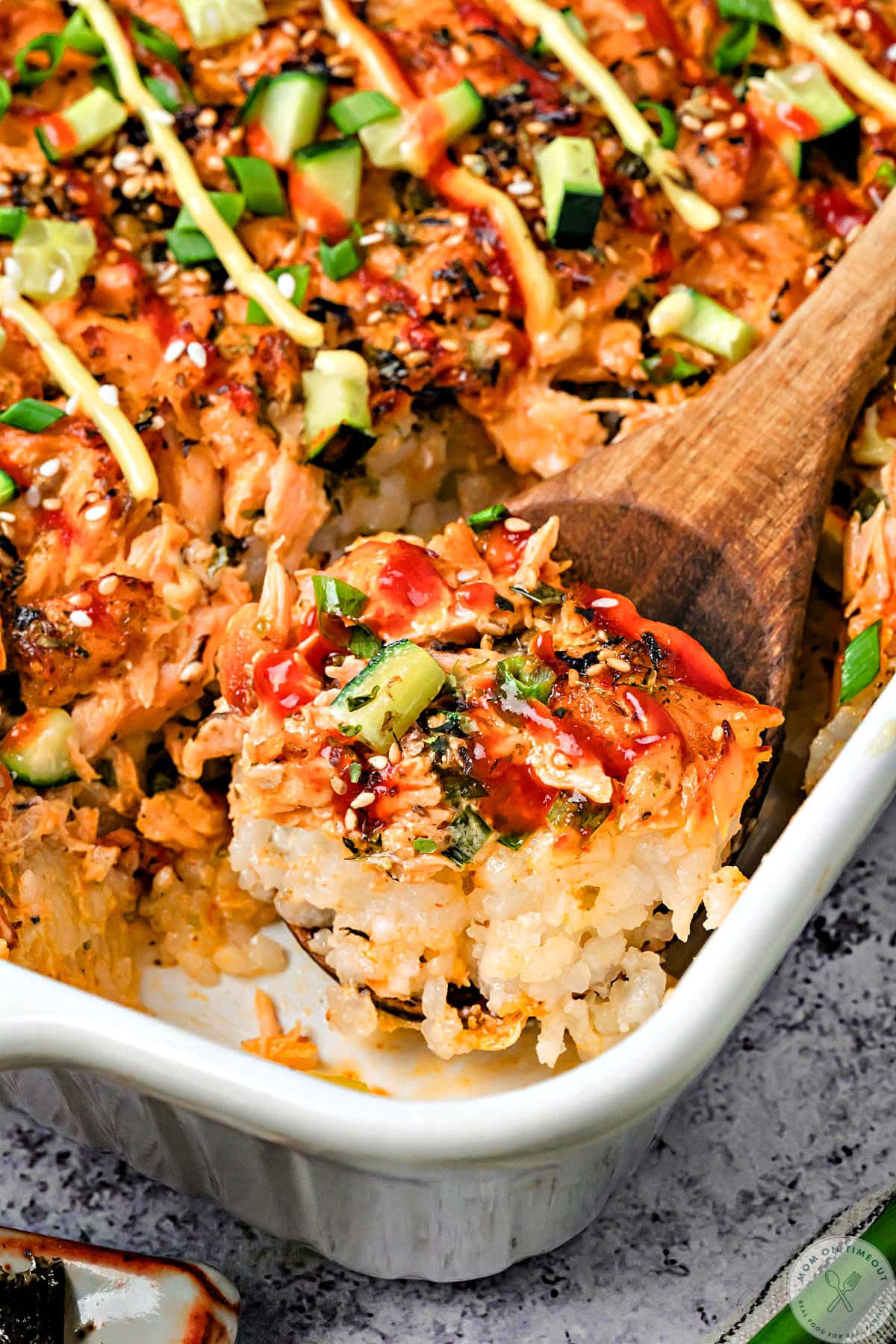
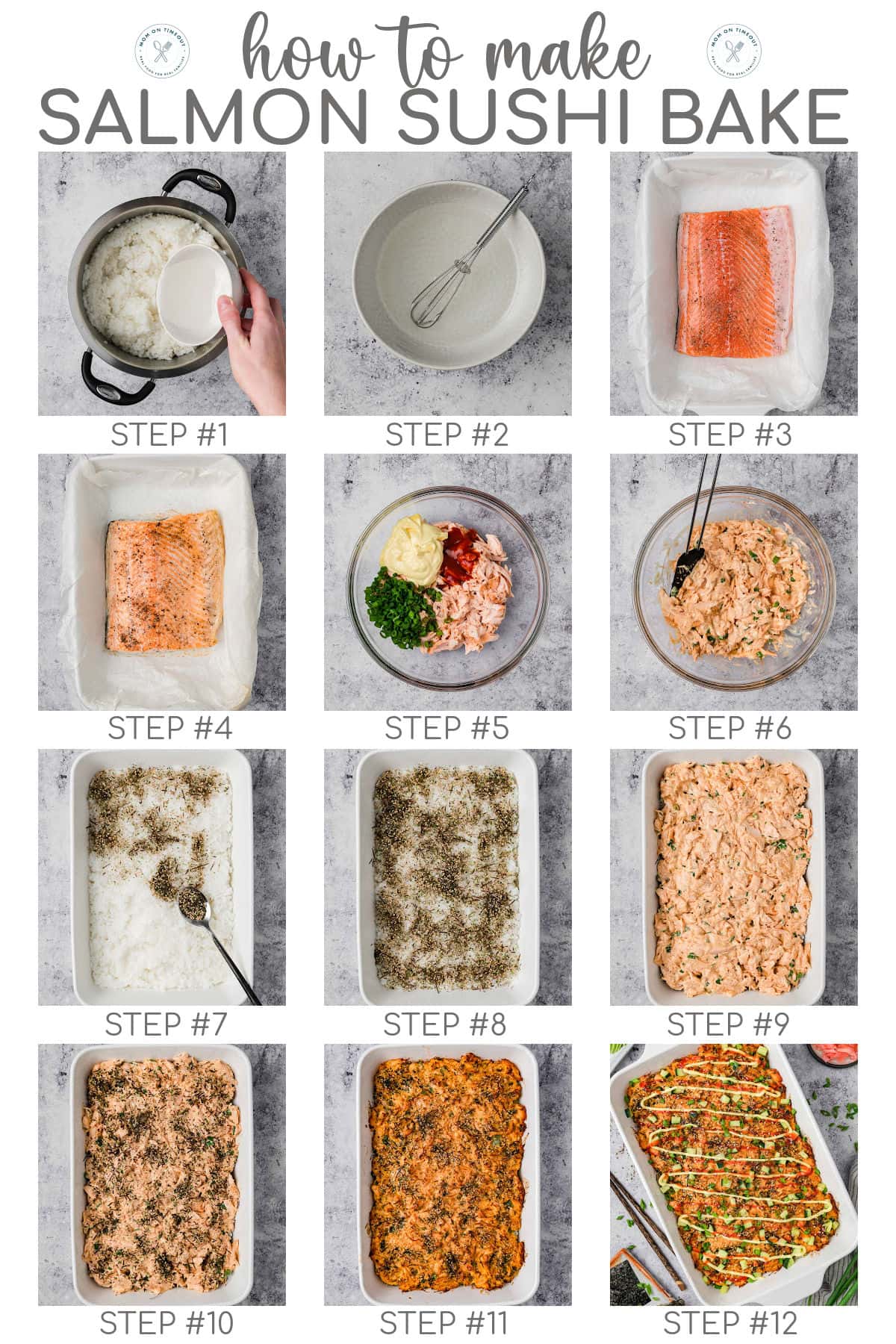
How To Make Sushi Bake
This recipe comes together in a few simple stages: cook and season the rice, prepare the salmon, then layer and bake. Start the rice first so it can cook while you work on the salmon.
Cook the rice.
- Rinse sushi rice under cold water and cook according to the package directions.
- Stir together rice vinegar, sugar and salt. Pour over the warm rice and fold until combined.
Make the salmon mixture.
- Place the salmon in the prepared dish and season with salt and pepper.
- Bake salmon for 15-20 minutes at 400°F until salmon flakes easily with a fork. Let cool slightly and then flake with a fork.
- Add kewpie mayonnaise, sriracha, soy sauce, toasted sesame oil, and green onions to the salmon.
- Stir until combined.
Assemble the sushi bake.
- Spread the seasoned rice over the bottom of the same baking dish and press it into an even layer.
- Sprinkle half of the furikake seasoning over the rice.
- Spread the salmon mixture over the top.
- Sprinkle with the remaining furikake.
- Bake at 400°F for 10 minutes. (Broil for 1-2 minutes at the end for a lightly browned top, if desired.)
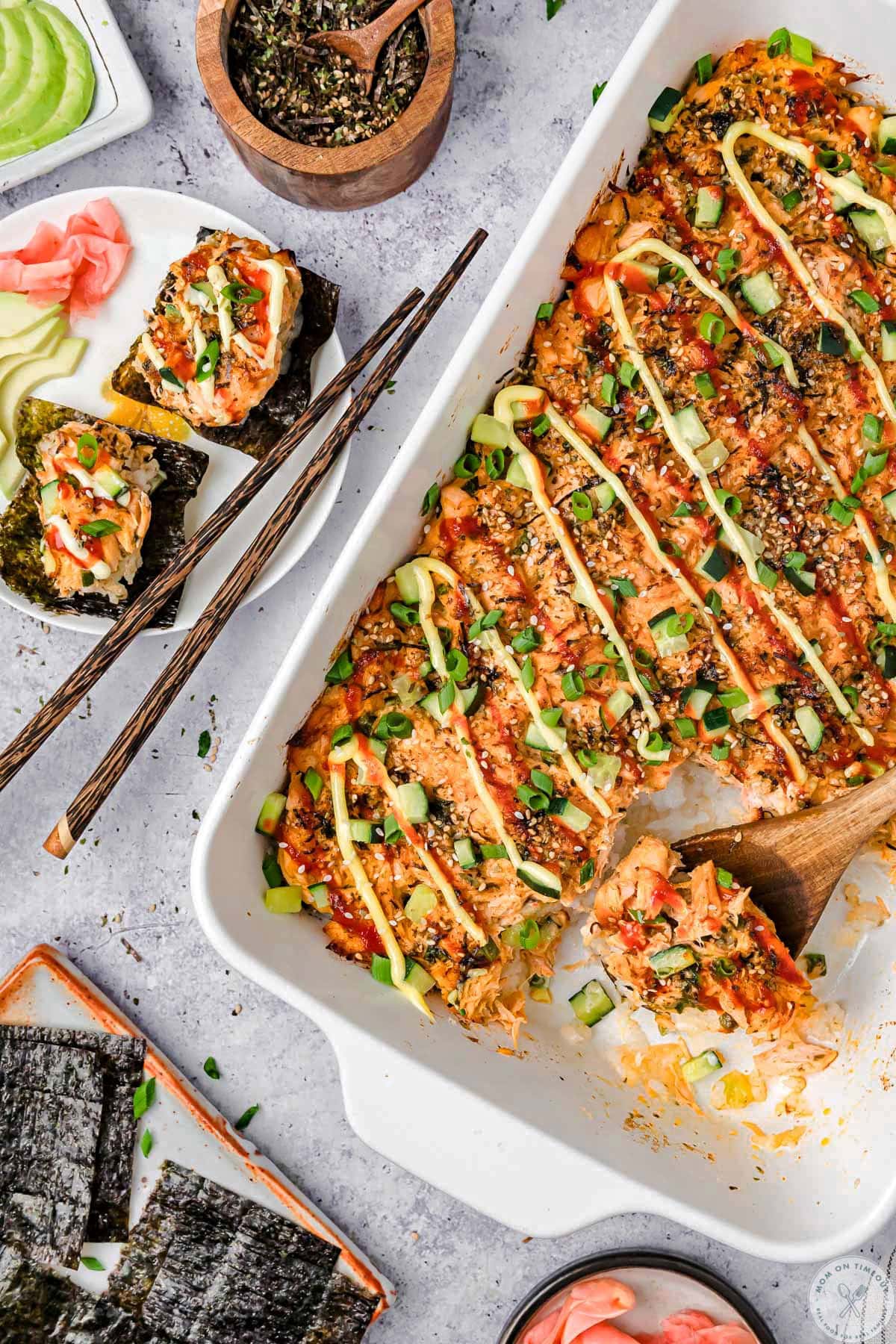
- Top with cucumber and green onions. Drizzle with Kewpie mayonnaise and sriracha, if desired. Serve warm with avocado, pickled ginger, and roasted nori sheets for scooping.
Storage Information
This sushi bake is at its best freshly warmed, with the toppings added just before serving. Store the rice and salmon separately from the fresh toppings whenever possible.
- Refrigerator: Refrigerate leftovers promptly in an airtight container and enjoy within 3 to 4 days. If you prepared the salmon ahead, count that time from the day it was first cooked.
- Make ahead: Prepare the rice and salmon mixture up to one day ahead, cool promptly and refrigerate separately in covered containers. Assemble before baking and allow extra time for the chilled layers to heat through.
- Reheating: Warm individual portions in the microwave, loosely covered, until steaming hot throughout. A small splash of water over the rice can help keep it from drying out. Or, reheat the whole dish, covered with foil, in a 350°F (175°C) oven. Add fresh toppings after reheating.
- Freezing: For the best texture, enjoy this recipe fresh or refrigerated. You can freeze portions without the toppings for up to one month, but the rice may become firmer and the mayonnaise mixture can change texture. Thaw overnight in the refrigerator before reheating.
- Toppings: Keep cucumber, avocado and ginger separate from the bake, and store nori sealed in a dry place to preserve its crunch. Slice avocado just before serving.
Variations To Try
A few small changes can make this bake work for different tastes. Keep the rice and salmon layers as your base, then have fun with the heat and toppings.
- Reduce the sriracha in the salmon mixture to reduce the heat and offer extra at the table for those that love spicier food.
- Add an extra drizzle of sriracha or thinly sliced jalapeños before serving if your family can handle the heat.
- Try shredded carrots or thinly sliced radishes alongside the cucumber for added crunch.
- Use a little sushi sauce for a sweeter, savory finish.
- Spoon the warm bake into bowls, add your toppings and crumble roasted nori over the top.
Do I need sushi-grade salmon?
No. The salmon is fully cooked before it goes into the filling, so salmon intended for cooking works well. If using frozen salmon, thaw it completely in the refrigerator and pat it dry before baking.
Can I use regular mayonnaise instead of Kewpie?
Yes! Regular mayonnaise will still create a creamy filling. Kewpie has a distinctive richness and tang, so the finished flavor will be a little different.
How do you eat a sushi bake?
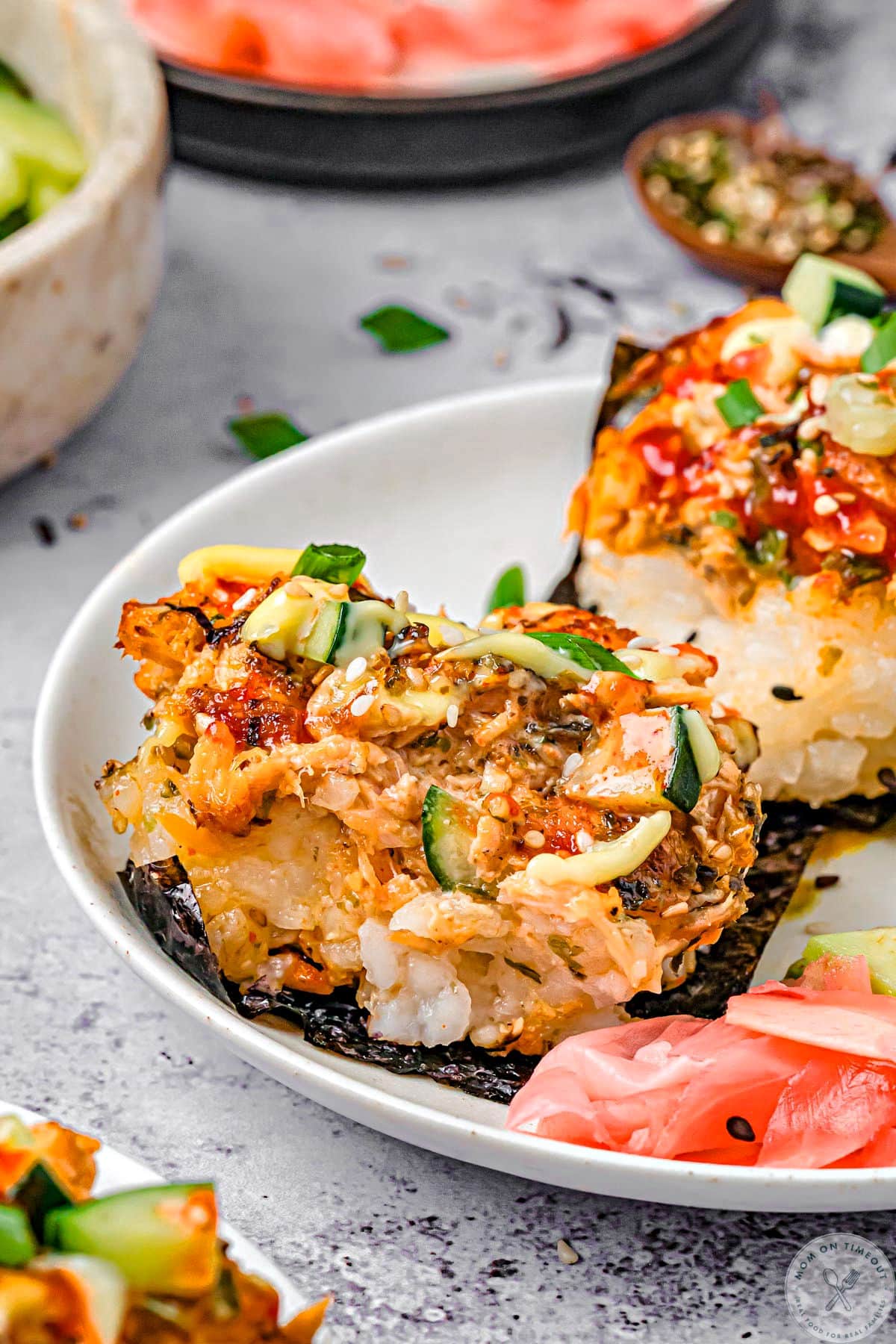
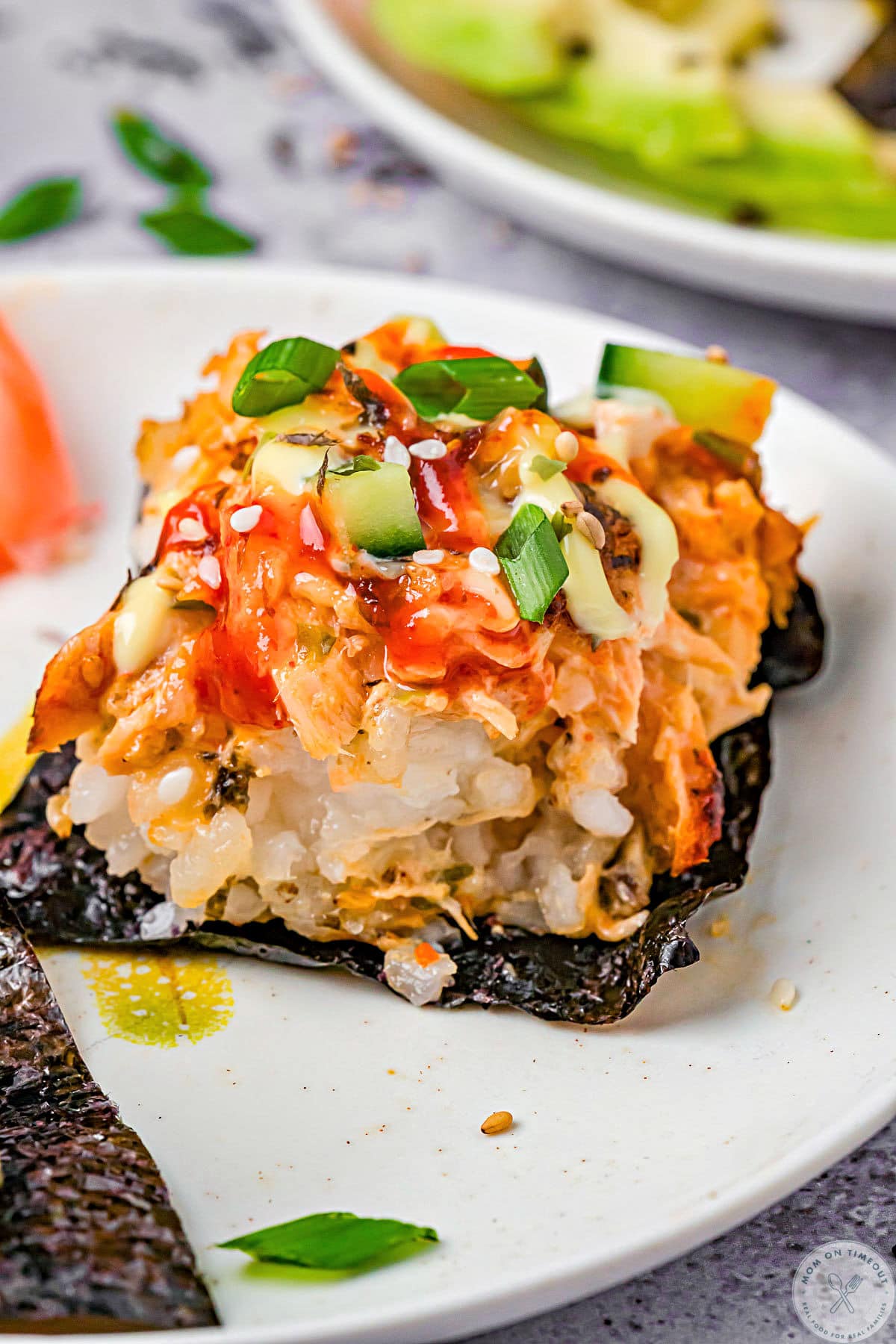
Place a small scoop of the warm rice and salmon onto a piece of roasted nori. Add cucumber, avocado or a little pickled ginger, fold and enjoy right away while the nori is still crisp.
Trish’s Tips
A few simple details make a big difference in the texture of this bake. These tips will help keep the rice tender, the salmon creamy and the toppings fresh.
- Season the rice while it’s warm. Gently fold in the vinegar mixture so it distributes evenly without mashing the grains.
- Use the rice package’s water measurements. The amount can vary by brand and cooking method.
- Keep the salmon in flakes. Break it into bite-sized pieces rather than mashing it into a paste.
- Press the rice gently. You want an even base that scoops easily, without packing it into a dense layer.
- Watch the broiler closely (if using). The creamy topping can brown quickly. Skip this step if you’re keeping the parchment lining or your dish isn’t broiler-safe.
- Add fresh toppings last. Cucumber and avocado are best added after baking.
- Keep the nori on the side. Assemble each bite as you eat so the sheets stay crisp.
More Seafood Favorites
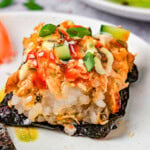
Salmon Sushi Bake
Ingredients
For the sushi rice:
- 2 cups sushi rice
- ¼ cup rice vinegar
- 2 tablespoons granulated sugar
- 1 teaspoon salt
For the salmon mixture:
- 2 pound salmon fillet
- ¾ teaspoon salt
- ½ teaspoon freshly ground black pepper
- ½ cup Kewpie mayonnaise
- 2 tablespoons sriracha or to taste
- 2 tablespoons soy sauce
- 2 teaspoons toasted sesame oil
- 3 green onions thinly sliced
For assembly and serving:
- ¼ cup furikake seasoning divided
- ½ English cucumber
- 2 green onions thinly sliced
- avocado
diced or sliced, for serving
- pickled ginger for serving
- roasted nori sheets for serving
Instructions
Cook the rice.
- Rinse sushi rice under cold water until the water runs mostly clear. Cook according to the package directions.2 cups sushi rice
- In a small bowl, stir together rice vinegar, sugar, and salt until dissolved. Pour over the warm rice and fold until combined. Set aside.¼ cup rice vinegar, 2 tablespoons granulated sugar, 1 teaspoon salt
Make the salmon mixture.
- Preheat the oven to 400°F (200°C). Line a 9×13-inch baking dish with parchment paper. Place the salmon in the prepared dish and season with salt and pepper. Bake for 15-20 minutes, or until cooked through and the salmon flakes easily with a fork. A thick, large fillet may need a few extra minutes.2 pound salmon fillet, ¾ teaspoon salt, ½ teaspoon freshly ground black pepper
- Transfer the salmon to a large bowl and let cool slightly. Remove the skin, if necessary, and flake the fillet with a fork.
- Add mayonnaise, sriracha, soy sauce, toasted sesame oil and green onions to the salmon. Stir until combined.½ cup Kewpie mayonnaise, 2 tablespoons sriracha, 2 tablespoons soy sauce, 2 teaspoons toasted sesame oil, 3 green onions
Assemble the sushi bake.
- Spread the seasoned rice over the bottom of the same baking dish and press it into an even layer. Sprinkle half of the furikake seasoning over the rice.¼ cup furikake seasoning
- Spread the salmon mixture over the top. Sprinkle with the remaining furikake.
- Bake at 400°F (200°C) for 10 minutes, or until heated through. Broil for 1-2 minutes at the end for a lightly browned top, if desired.
- Top with cucumber and green onions. Drizzle with additional Kewpie mayonnaise and sriracha, if desired.½ English cucumber, 2 green onions
- Serve warm with avocado, pickled ginger, and roasted nori sheets for scooping.avocado, roasted nori sheets, pickled ginger
Notes
- Regular mayonnaise can also be used for this recipe, but Kewpie adds a richer, sweeter flavor.
- If you don’t have furikake, sprinkle the rice with crumbled roasted nori and sesame seeds instead.
- With 2 tablespoons of sriracha, the salmon mixture is mildly spicy. Add more for extra heat.
Try a salmon and crab combination: Replace half the salmon with shredded imitation crab for a delicious mix of flavors and textures. Bake the salmon as directed, using less salt and pepper for the smaller amount of fish, then combine it with the imitation crab and sauce ingredients. Keep the total amount of seafood the same.
Storage Information This sushi bake is at its best freshly warmed, with the toppings added just before serving. Store the rice and salmon separately from the fresh toppings whenever possible.
- Refrigerator: Refrigerate leftovers promptly in an airtight container and enjoy within 3 to 4 days. If you prepared the salmon ahead, count that time from the day it was first cooked.
- Make ahead: Prepare the rice and salmon mixture up to one day ahead, cool promptly and refrigerate separately in covered containers. Assemble before baking and allow extra time for the chilled layers to heat through.
- Reheating: Warm individual portions in the microwave, loosely covered, until steaming hot throughout. A small splash of water over the rice can help keep it from drying out. Or, reheat the whole dish, covered with foil, in a 350°F (175°C) oven. Add fresh toppings after reheating.
- Freezing: For the best texture, enjoy this recipe fresh or refrigerated. You can freeze portions without the toppings for up to one month, but the rice may become firmer and the mayonnaise mixture can change texture. Thaw overnight in the refrigerator before reheating.
- Toppings: Keep cucumber, avocado and ginger separate from the bake, and store nori sealed in a dry place to preserve its crunch. Slice avocado just before serving.
Tools and Equipment (affiliate links): 9×13 inch Baking Dish | Glass Mixing Bowls | Whisk | Measuring Cups | Measuring Spoons |
Please see post above for more information, step-by-step process photos, recipe tips and frequently asked questions.






Leave a Reply